 English
 français
 Deutsch
 Español
 italiano
 русский
 português
 tiếng việt
 Türkçe
 Polska
 Indonesia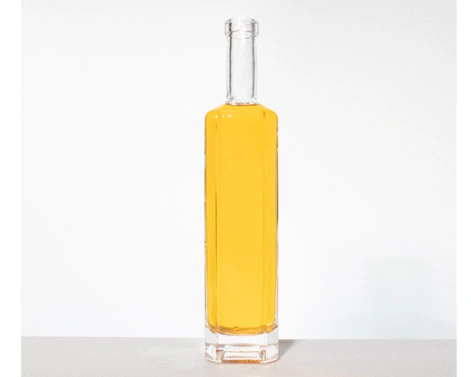
E-mail:
info@rsgbottle.com
EN

Meta Description: Not sure whether to go with 500ml or 750ml glass bottles? We break down shipping costs, breakage risks, and container space — so you can make a smarter wholesale decision.
If you’re sourcing custom glass bottles wholesale, here’s something most suppliers won’t tell you upfront:-转换自-png.webp "photobank_(10)-转换自-png.webp")
And one of the biggest factors? The size you choose — 500ml vs 750ml.
Sure, the per-unit price of the bottle matters. But if you ignore logistics, you could be burning cash on every pallet. So let’s talk real numbers, real trade-offs, and which size actually wins when it comes to per-unit shipping cost.
-转换自-png.webp "photobank_(8)-转换自-png.webp")
Most people think shipping is just about weight. That’s not quite right.
Carriers use something called dimensional weight (DIM weight) — basically, how much space your package takes up on the truck or plane. And here’s where 500ml bottles have a real edge.
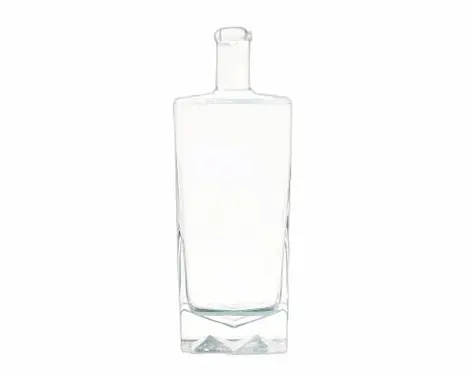
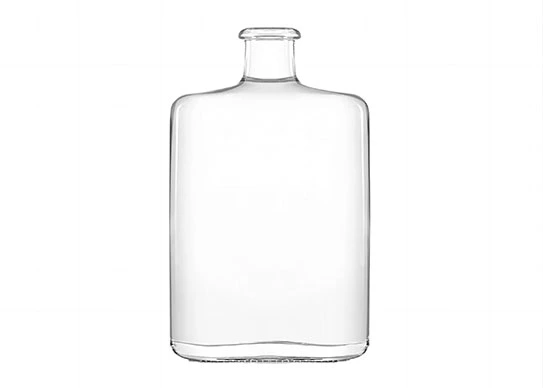
A typical 500ml bottle is shorter and slimmer — roughly 7.5 inches tall. A 750ml bottle? Closer to 10.5 inches.
That extra height means more empty air in every box. And you’re paying to ship that air.
Bottom line: For the same number of bottles, 500ml bottles can lower your DIM weight by about 25–30%. That’s real savings, especially if you’re shipping by air.
Imagine you’re filling a standard 40-foot container. This is where the math gets really interesting.
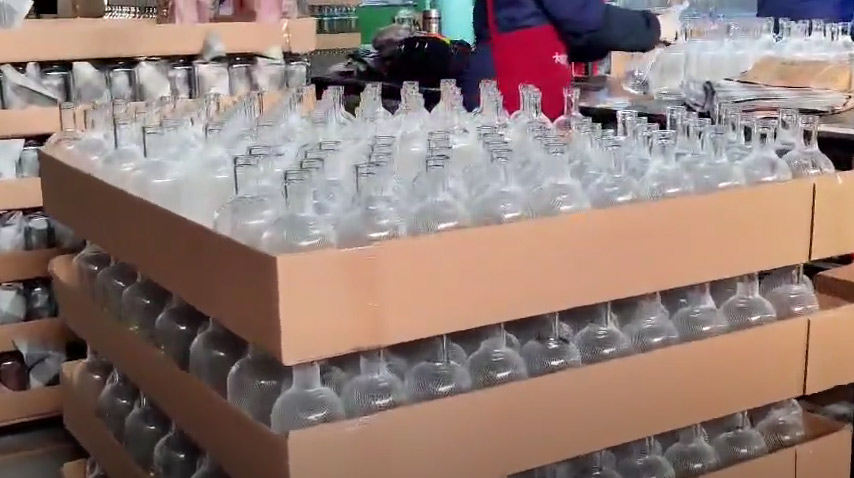
With 500ml bottles, you can stack cartons higher because they’re shorter and more stable. You’re looking at roughly 28,000 to 32,000 bottles per container.
With 750ml bottles, the height limits your stacking. You’ll only fit about 18,000 to 22,000 bottles.
Now do the math on freight cost. Let’s say ocean shipping runs you $5,000 per container.
For 500ml, that comes out to about 6perbottle∗∗inshippingcost.For750ml,you’relookingatroughly∗∗0.25 per bottle.
That doesn’t sound like much until you scale it. On a 50,000-bottle order, you’re saving nearly $5,000 just by choosing the smaller size.
-转换自-png.webp "photobank_(7)-转换自-png.webp")
Taller bottles break more easily. It’s simple physics.
In a moving truck or container, the top of a 750ml bottle experiences more force — more leverage, more wobble, more risk.
Real-world data from glass bottle shippers shows that 500ml bottles typically have a breakage rate of around 0.5 to 1.5 percent, while 750ml bottles can run as high as 2 to 4 percent.
On 10,000 bottles, that could mean 250 extra broken bottles in one shipment. You lose product, you pay for cleanup, and you delay your orders. It adds up fast.
Absolutely. Don’t get me wrong — 750ml isn’t a bad choice. It just serves a different goal.
Go with 750ml if:
You’re selling premium products like wine, whiskey, or high-end olive oil. The tall, elegant shape signals value.
Your product itself is expensive (like serums or rare spirits). Adding 250ml costs you very little in glass, but customers will pay more for the larger size.
Shelf presence matters more than shipping cost. In retail, bigger often looks better.
Stick with 500ml if:
You sell online (DTC) and pay for every package individually.
You’re shipping long distances or by air.
You care most about landed cost per unit — not just bottle price.
Use both sizes strategically:
500ml for e-commerce — lower shipping cost to your customers.
750ml for retail partners — better shelf appeal and perceived value.
Same brand, same liquid, just different packaging for different channels.
The 500ml bottle wins — clearly.
It gives you lower dimensional weight fees, more bottles per shipping container, fewer breakage headaches, and a lower per-unit freight cost.
Only step up to 750ml if the experience and premium feel are worth paying more to ship.
At RSG Glass, we don’t just sell custom glass bottles — we help you lower your total landed cost. Whether you need 500ml for lean e-commerce logistics or 750ml for premium retail presence, we’ll guide you through real-world freight optimization, breakage reduction, and pallet efficiency.
We’ve helped dozens of brands cut their per-unit shipping costs by 20% or more — just by choosing the right bottle size and carton configuration.
Ready to save money before your first shipment even leaves the factory?
Talk to RSG Glass today. Let’s find the right bottle for your brand, your budget, and your logistics reality.